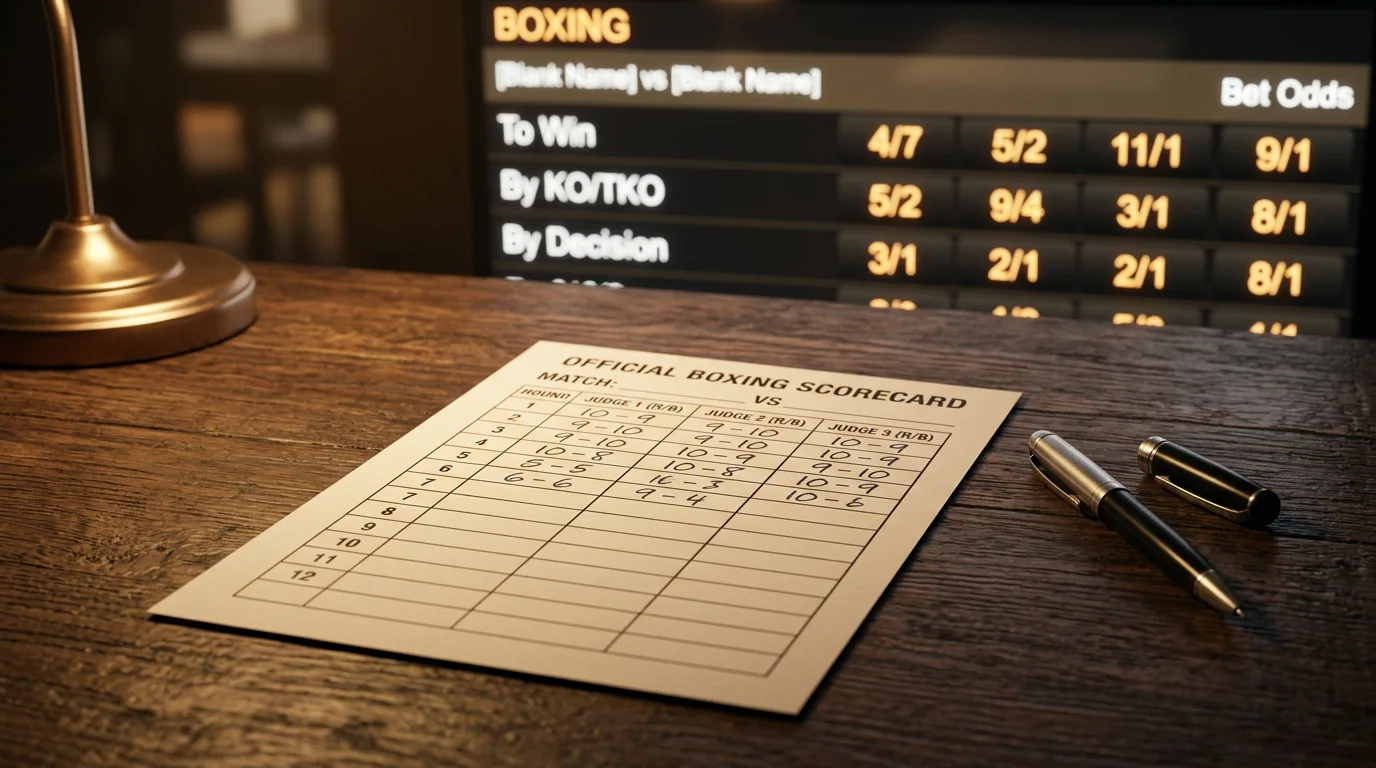
Boxing Odds Comparison: How Line Shopping Adds Value to Every Bet
 Available in US
The single most reliable edge I have ever extracted from UK boxing betting is not analytical. It is operational. Across roughly two thousand bets logged in my records, the difference between staking each bet at the best available price across three to five operators and staking each bet at the first price I happened to see came to approximately 6 percent of total turnover. On a yearly stake volume of 20,000 pounds, that operational edge is worth around 1,200 pounds. The analytical work that produced the selections in the first place is harder to quantify and far more variable. The line-shopping edge is consistent, mechanical, and available to anyone willing to put in 90 seconds per bet.
Line shopping — the practice of comparing prices across multiple bookmakers before placing a bet — is the simplest reliable strategy in UK boxing wagering. It does not require analytical insight or a sharp read on a fight. It requires only the discipline of checking prices systematically and the operational infrastructure of accounts at several operators. Online betting platforms processed approximately 75 percent of all sports betting revenue worldwide in 2025, and the proliferation of options that drives that figure is precisely what produces the price dispersion that line shopping exploits.
This guide walks through why UK bookmaker prices differ on the same boxing bouts, how to build an efficient line-shopping workflow, what aggregator tools can and cannot do for you, and where line shopping stops adding incremental value relative to the time investment. Discover everything about bet on boxing here.
Why UK Bookmakers Price the Same Fight Differently
If markets were genuinely efficient, the same boxing bout would carry identical prices at every UK operator. They are not, and they do not. Three structural reasons produce the persistent dispersion across bookmakers, and understanding them sets the framework for which bouts are most worth shopping.
The first reason is trading desk allocation. UK operators allocate trading capacity in proportion to expected handle. A flagship heavyweight title fight gets the trading desk’s full attention; a regional title bout on the same Saturday gets a fraction. The bouts with less analytical attention produce wider price dispersion across operators because each desk’s pricing is based on less rigorous probability estimation.
The second reason is risk balancing. Operators adjust prices in response to incoming stake flow, shortening the price on the side that has attracted heavy money and lengthening the price on the opposing side to balance the book. Two operators with different customer bases and different stake-flow patterns will end up with materially different prices on the same bout, even if both started from similar probability estimates. The dispersion that emerges is a direct consequence of differing customer behaviour rather than analytical disagreement.
The third reason is positioning. Some UK operators consistently price as price leaders — offering tighter margins to attract value-conscious customers — while others price as margin-prioritisers, holding wider implied overrounds to capture more revenue per stake. The structural positioning of each operator produces persistent patterns: certain operators reliably offer better moneyline prices on flagship bouts, others on undercards, others on round-betting markets. Mapping which operator leads on which market type is part of the operational work that makes line shopping efficient over time.
The cumulative effect is dispersion of typically 2 to 5 percent across UK operators on flagship moneyline markets, widening to 5 to 10 percent on undercard moneylines and round-betting markets, and to 10 to 15 percent or more on prop markets and bet builders. The dispersion is the line-shopping opportunity, and it scales inversely with bout profile. Check out our guide on Boxing on Prediction Markets: Peer-to-Peer Wagering Beyond the Sportsbook as well.
A Step-by-Step Line Shopping Workflow
Want to make line shopping a habit rather than an occasional good intention? Build the workflow before you need it. The simplest version takes about 90 seconds per bet once the infrastructure is in place, and the infrastructure is the part most casual punters skip entirely.
The infrastructure has three components. The first is account coverage at three to five UK operators with verified identity and a working balance at each. Funding all accounts equally is not necessary; what matters is having operational accounts with verified payment methods so that prices can be taken at any of them within seconds of identifying value. The second is browser tab discipline: open the relevant fight market at every operator before checking any of them, so that the comparison is across simultaneous loaded prices rather than against memory of what one operator showed earlier. The third is a quick reference for which operator leads which market type, built up over time from your own observation rather than third-party recommendations.
The workflow itself is straightforward. Before staking on any bout, open the moneyline (or other intended) market at each of your three to five operators. Note the decimal price at each. Identify the longest price among the operators that meets the line-shopping threshold. The threshold matters: if the price advantage at the best operator is less than 1.5 percent above the next best, the operational cost of switching may not justify the benefit, particularly if the lagging operator already has the working balance for the stake. Above 2 percent, the better price is almost always worth taking.
Two practical refinements improve the basic workflow. The first is timing: prices move during the day before fight night as new stake flow arrives, and the dispersion across operators is widest in the 24 to 48 hours before the bout rather than at the moment the markets open or at the final moments before the ring walk. Mid-morning on fight day is typically the sweet spot for flagship bouts. The second is stake size adjustment: the longer the price advantage, the more stake the punter should allocate to that operator within their normal bankroll percentage, because the realised value of the operational edge scales linearly with stake.
Using Odds Aggregators for Boxing Events
Odds aggregator websites and apps display prices from multiple UK operators side by side, allowing comparison without opening individual accounts. They are useful tools but with specific limitations that punters should understand before relying on them.
The advantages are obvious. An aggregator collapses the time required for a price comparison from 90 seconds to roughly 15. It also provides historical price tracking, showing how a bout’s prices have moved across the lead-up to fight night, which is genuinely useful information for understanding stake flow patterns and identifying late-arriving line moves.
The limitations are less obvious but matter. Aggregators do not always include every UK operator; coverage depends on commercial arrangements between the aggregator and the operators it lists. Some operators that lead on specific market types are absent from the major aggregators, which means the displayed “best price” may not actually be the best available across the full UK market. Aggregator prices are also typically delayed by 30 seconds to several minutes from the operator’s actual current price, which is fine for pre-fight markets but inadequate for in-play wagering where prices move continuously.
The most efficient workflow combines aggregators and direct operator checking. Use the aggregator for the initial scan to identify which operators are showing the longest prices on the bout, then verify the price at the lead operator’s site directly before staking. The aggregator narrows the search; the direct check confirms the price has not moved in the time between the aggregator’s last update and your stake. The combined workflow takes roughly 30 to 45 seconds, capturing most of the aggregator’s time saving while preserving the price accuracy of direct checking.
When Line Shopping Stops Adding Value
Line shopping is reliable but not unlimited. Three structural conditions reduce or eliminate the edge, and recognising them allows the punter to allocate effort efficiently rather than shopping every bet uniformly.
The first condition is small stake size. The realised value of a price advantage scales linearly with stake. A 3 percent edge on a 1,000 pound stake is worth 30 pounds; a 3 percent edge on a 10 pound stake is worth 30 pence. The 90 seconds of operational time per shopped bet is roughly the same in both cases, but the per-second yield is dramatically different. For very small stakes, the time invested in shopping may produce returns below the implicit hourly value of the punter’s time. Disciplined small-stake punters often pre-commit to a lead operator on each market type and skip the per-bet shopping altogether.
The second condition is high market efficiency. Flagship heavyweight title fights with deep liquidity and concentrated public attention produce relatively narrow price dispersion across operators, sometimes only 1 to 2 percent across the major UK bookmakers. The line-shopping edge on these bouts is real but small, and the time investment may be more efficiently allocated to bouts where the dispersion is wider. The reliable rule: shop hardest where the trading desks have allocated the least attention, not where they have allocated the most.
The third condition is account restrictions. UK operators track customer behaviour, and punters who consistently take the longest available price across operators get flagged as line-sensitive bettors. Operators are not obliged to extend offers or accept full stake sizes from line-sensitive accounts, and account closures or stake limits typically arrive within months for punters whose behaviour pattern is identifiable as best-price-only. The edge is real but the runway on each individual account is finite, and line-shopping strategies need to factor in the operational reality of account churn.
For the underlying odds-format mathematics that line shopping relies on, see our explainer on boxing betting odds explained.
How much can line shopping actually save me on UK boxing bets?
Across a year of disciplined activity, the realised value of consistent line shopping typically runs at 4 to 7 percent of total stake volume, depending on which markets you stake on. Higher dispersion on undercards and prop markets pushes the figure toward the upper end; concentration on flagship bouts pushes it toward the lower end.
Do all UK bookmakers price the same boxing bouts?
Most leading UK operators offer markets on flagship championship bouts. Coverage varies on undercard fights, regional title bouts, and women’s boxing, with smaller operators sometimes offering only moneyline markets while larger operators offer full method, rounds, and bet builder coverage. The dispersion of available markets is itself part of the line-shopping landscape.
Will UK bookmakers limit my account if I always take the best price?
Possibly, yes. Operators track customer behaviour and identify line-sensitive accounts through stake patterns and price-taking timing. Account restrictions typically take the form of reduced stake limits or exclusion from promotions, with full closures occurring less frequently. The runway on any individual account is finite for consistent best-price takers.
Prepared by the bet on Boxing editorial staff.