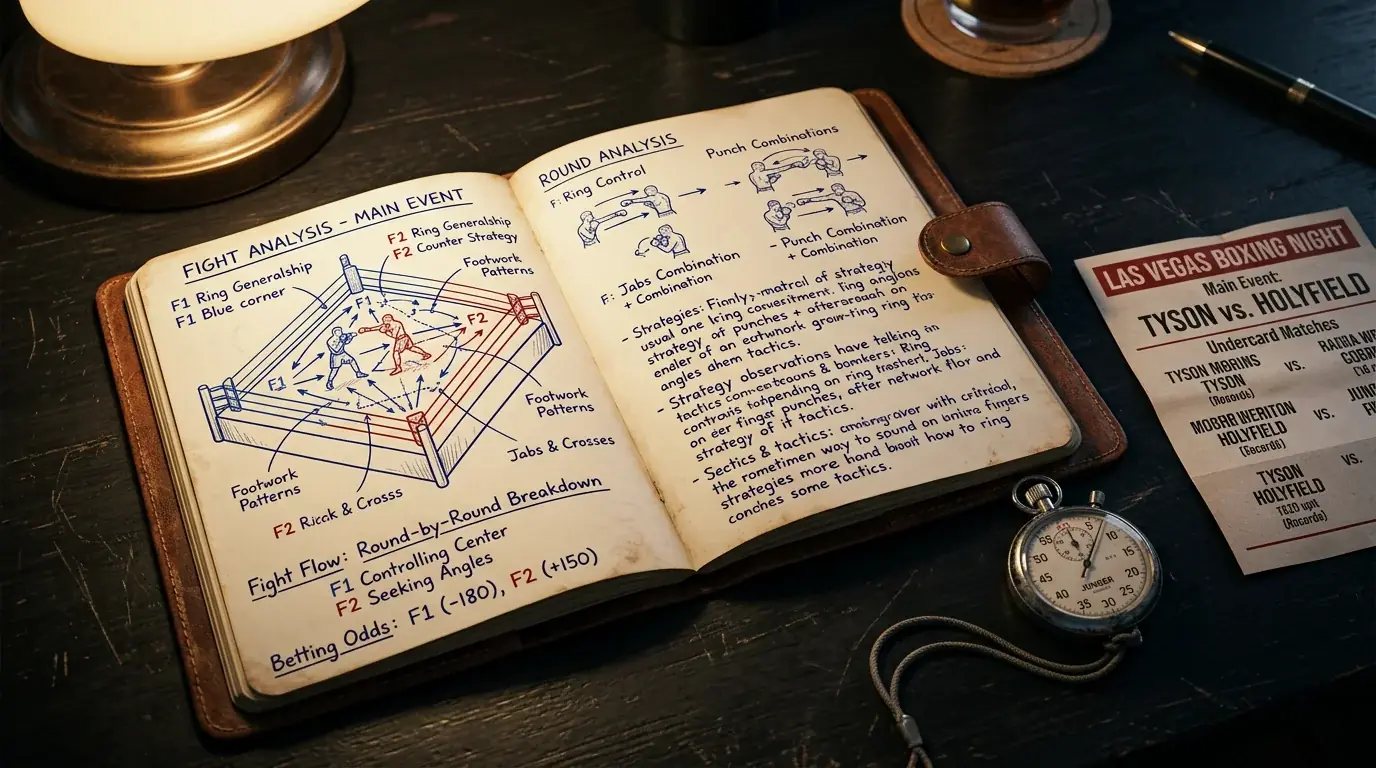
Boxing Styles and Betting: How Stance and Tactics Shape the Odds
 Available in US
I logged the results of every fight I wagered on across two full seasons alongside the stylistic profiles of both fighters, and the pattern that emerged was unmistakable. Style matchups predicted outcomes more reliably than records, more reliably than odds, and more reliably than any single physical attribute I tracked. A fighter’s win-loss record tells you what happened. A fighter’s style tells you why — and more importantly, it tells you what is likely to happen against a specific opponent with a specific set of tools.
The most reliable handicapping inputs in boxing are not headline statistics like punch totals or win streaks. They are stylistic profiles: the way a fighter sets their feet, the rhythm at which they engage, and the patterns they fall into when pressed. The betting markets reflect this less efficiently than they reflect simpler inputs. The global boxing betting market is valued at around £3.6 billion, with compound annual growth projected at 8 percent through 2033, and the dispersion of pricing between operators on stylistic matchups is one of the places that growth still reflects pricing inefficiency.
This guide walks through the four most useful style frameworks for UK punters: stance dynamics, pressure-versus-counter rhythm, style matchups proper, and how each maps to specific betting markets. Discover everything about bet on boxing here.
Southpaw versus Orthodox: Stance Dynamics in the Market
I have a friend who insists that every southpaw is automatically a value play against any orthodox fighter, regardless of records. He is wrong about half the time, but the half he is right about pays well enough to keep him interested. Understanding which half he gets right is the first useful style read I picked up.
Roughly one in ten boxers fights from a southpaw stance, against the nine in ten who fight orthodox. The numerical asymmetry produces a training-camp asymmetry: the average orthodox fighter has spent fewer rounds in camp facing southpaws than the average southpaw has spent facing orthodox opponents. The market sometimes prices this and sometimes does not, and that variability is where betting value can sit.
The mechanical reality of the matchup is that the lead foot of one fighter aligns with the lead foot of the other on the outside, which changes the geometry of every standard exchange. Jabs cross instead of meeting head-on, rear hands have a clearer line to the opposite side of the head, and footwork patterns reverse direction. Fighters who have done extensive southpaw camp work adjust quickly. Fighters who have not adjust slowly, and the early rounds of an orthodox-versus-southpaw bout often look ragged for the orthodox fighter even when they later settle.
For betting purposes, the implication is that round-betting markets in stance-mismatched bouts often underprice early-round outcomes for the southpaw. If you have an underlying read that the orthodox fighter will struggle through the opening rounds while adjusting, an early-rounds knockout or knockdown selection on the southpaw can carry value that the moneyline does not capture. This applies most strongly when the orthodox fighter has not faced a southpaw recently or has a record showing struggles in past stance-mismatches.
Pressure Fighters and Counter Punchers
The single most expensive bet I ever made in my early days was on a high-volume pressure fighter against a slick counter-puncher, on the assumption that pressure plus power would overwhelm technique. The bout went the distance, my fighter looked exhausted by round eight, and my over selection on rounds totals never had a chance from round three onwards. I had assumed the pressure-counter axis worked one way; in fact it works the opposite way, and that lesson has saved me far more than it cost.
The pressure-versus-counter axis is the most useful single stylistic distinction in boxing handicapping. Pressure fighters move forward, throw in volume, and trade the precision of their work for the rhythm they impose. Counter punchers wait, pick their moments, and trade the volume of their work for the quality of the connections.
The market often misprices the totals on pressure-versus-counter bouts. The instinct of the casual punter is to assume that a pressure fighter against a defensive specialist will produce a high-volume, high-stoppage bout. The reality is closer to the opposite. Counter-punchers absorb pressure by retreating in lines that minimise punishment, and pressure fighters running into walls of effective defence often produce lower output than their headline averages would suggest.
In pressure-versus-counter matchups, totals markets are frequently set above what the actual bout produces. A defensive counter-puncher pulls a pressure fighter into longer exchanges and fewer clean connections, which reduces both knockdown frequency and overall punch volume. The under on rounds totals carries situational value that the line often misses. The reverse holds when two pressure fighters meet — the market correctly prices a high-action bout, but it often undervalues stoppage probability because it focuses on output rather than on the quality of the exchanges.
Style Matchups That Move Round-Betting Lines
Beyond the binary distinctions, certain style matchups are stylistically asymmetric in ways the round-betting markets struggle to price. Three of them recur often enough on UK cards that they deserve their own treatment.
The first is the slick boxer against the swarmer. A technical boxer with sharp footwork against a high-volume swarmer typically produces a points-decision outcome on the cards if the boxer’s defence holds, and an early-rounds stoppage if it does not. The market often prices these bouts as if a middle-rounds stoppage is the most likely outcome, when the actual distribution is bimodal: either an early stoppage or a points decision, with relatively little probability mass in the middle. Round-betting selections clustered in rounds 5 to 8 are typically the worst value in this matchup; selections at the extremes of the round distribution tend to carry the highest expected value.
The second is the volume puncher against the body specialist. A fighter who works the body relentlessly often takes the early rounds tactically and the late rounds physically. A volume puncher who relies on head shots, against an opponent who maintains a high punch count to the midsection, frequently fades in rounds 8 through 12 in ways that the moneyline does not fully reflect. Late-rounds knockout selections on the body specialist carry value when the matchup has the right stylistic profile.
The third is the heavy-handed novice against the durable veteran. A fighter with one-punch power but limited rounds at the top level, against a veteran who has been stopped only by elite competition, produces a binary outcome: an early stoppage if the power lands cleanly, or a unanimous decision for the veteran if the durability holds. Method-of-victory markets pricing the matchup tightly often miss the bimodal distribution.
Translating Style Reads into Market Selections
Style analysis is most useful when it produces a specific market selection, not just a directional view on the bout. The question to ask is not “who wins?” but “what is the most likely shape of the fight, and which market reflects that shape with the cleanest pricing?”
Stance mismatch with limited camp adaptation translates into early-round knockdown or stoppage selections. Pressure versus technical defender translates into the under on rounds totals. Two pressure fighters translate into an inside-the-distance method selection. Slick boxer versus swarmer translates into round selections at the distribution extremes — early or late, not middle. Body specialist versus volume puncher translates into late-rounds method selections. Heavy-handed novice versus durable veteran translates into binary method markets, with early KO and late decision the two priced positions.
The translation works because style produces specific behavioural patterns under stress, and those patterns map to specific market regions where the bookmaker’s pricing model has more room to be wrong. The moneyline absorbs most of the public’s view on who wins; the structural markets — rounds, method, distance — often carry residual pricing inefficiency that style analysis can exploit. Check out our guide on Boxing Value Betting: How to Identify Mispriced Odds Systematically as well.
The limit of style analysis is that it works best on bouts where both fighters have enough professional history to produce reliable stylistic profiles. Prospect bouts, fighters who have changed trainers between camps, and matchups with significant weight or age differentials produce noisier stylistic predictions and weaker market translation. For applying these reads in real time as a bout unfolds round by round, see our guide to live boxing betting and in-play markets.
Are southpaw boxers really priced at value in UK markets?
Sometimes, but not always. The pricing inefficiency on stance mismatches has compressed as analytical tools have improved, but it still appears in lower-tier bouts and on undercards where the public attention is thinner. Major main events generally have stance dynamics priced in by fight night.
How do I identify a counter-puncher’s likely behaviour in a specific matchup?
Tape review of recent bouts is the most reliable input. Counter-punchers fall into characteristic patterns under pressure: typically retreating in straight lines or angles, with specific footwork tells that repeat across bouts. The patterns are individual to each fighter, and identifying them is the analytical work that produces durable style reads.
Can style analysis help with bet builder selections?
Yes, particularly for combining method and rounds markets. A style read that produces a specific shape — early stoppage, mid-rounds technical decision, late-rounds body shot finish — can translate cleanly into a bet builder where the legs cohere into one prediction rather than reading as separate guesses.
Prepared by the bet on Boxing editorial staff.